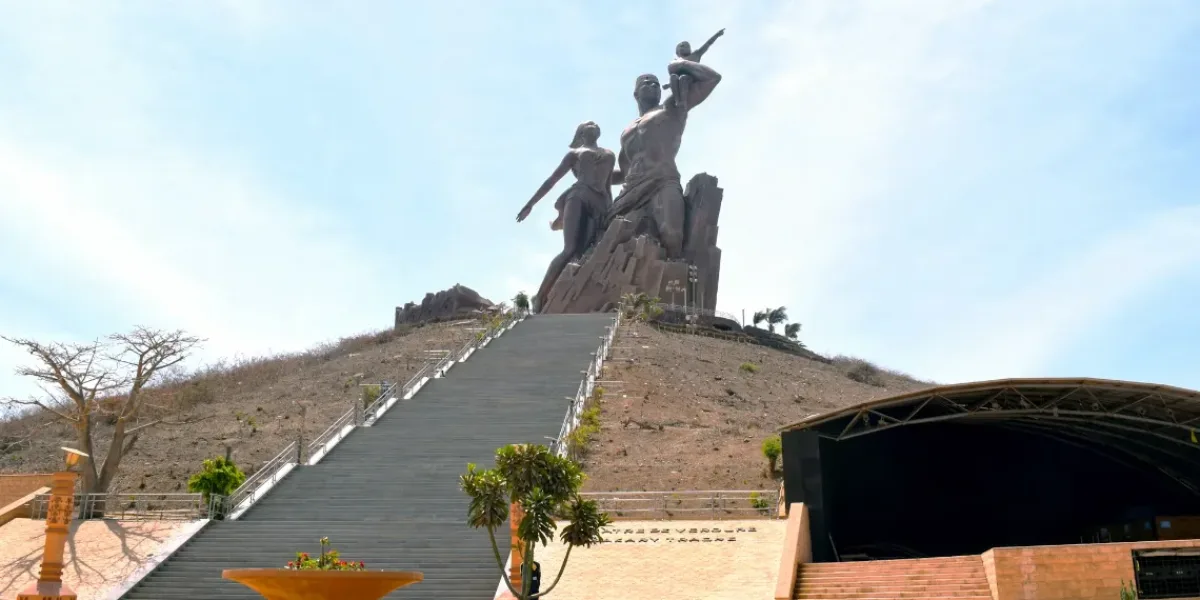
Dakar
Dakar is West Africa’s most connected city and the region’s clearest argument that the continent’s nomad infrastructure moment has already begun. At under $900 a month, sitting in an Atlantic timezone that maps easily to both European and East Coast US clients, and with 90 days of visa-free entry for most nationalities, Dakar offers an entry point to francophone Africa that most competitors on the nomad circuit have missed entirely. At Zenvivas, we connect digital nomads and remote professionals with verified workspaces and local communities across Africa and the Middle East, and Dakar’s combination of affordability, Atlantic location, and genuine cultural depth is exactly why it made our list.
What It Actually Costs to Work From Dakar
A solo remote worker in Dakar can live comfortably on $800 to $950 a month. Rent varies significantly by neighborhood. ALMADIES, the beach-facing expat zone on the Atlantic coast, runs about $1,000 a month for a one-bedroom. MERMOZ, quieter and more family-oriented, comes in at around $650. YOFF, more local in character, offers the most affordable options at around $400. A street food plate at a local restaurant costs $2 to $5. A coffee runs about $2.50.
Senegal uses the CFA franc (XOF), pegged to the euro, which keeps currency volatility low for European-income remote workers.
Where Remote Workers Work in Dakar
IL’ABODE and WITS SENEGAL are the two most-cited coworking options in the city. Monthly desks run $80 to $150 USD (approximately 48,000 to 90,000 XOF). Both spaces include air conditioning, which matters: Dakar’s heat is real and remote workers who arrive without a plan for it quickly discover that working from apartments without AC is not a long-term option in the warmer months.
The startup and tech scene in Dakar has grown enough that you are unlikely to be the only remote professional in the room at either space. ALMADIES and PLATEAU are the neighborhoods where most coworking activity is concentrated.
Internet: The Honest Reality
Average speeds in Dakar sit around 15 Mbps, rising to 15 to 30 Mbps in dedicated coworking spaces. This is workable for most remote tasks, but it is not fast. The more important variable is stability: power cuts happen and can take the internet with them. Backup generators at coworking spaces are not optional features, they are listed as amenities because the demand is real. A local Orange or Free SIM for 4G backup costs about $15 USD for 10GB. Build redundancy into your setup before you arrive, not after the first dropped call with a client.
Compared to Kigali, Dakar is slower on internet speeds. Compared to Douala, Dakar is similar in speed but more reliably connected overall.
Getting In: 90 Days, No Visa, No Drama
Most nationalities enter Senegal visa-free for up to 90 days. This is one of the most generous no-visa arrangements in West Africa and one of the clearest reasons nomads choose Dakar over other regional capitals. Extensions are handled through the immigration office in Dakar and may require a local sponsor or proof of funds. Some nomads do a short trip to The Gambia for a border run. There is no dedicated digital nomad visa, but the 90-day entry is long enough for most standard stays.
Neighborhood Cheat Sheet
ALMADIES: Dakar’s Atlantic-facing expat zone. Beach access, the highest concentration of international restaurants and cafés, and a relaxed evening scene. About $1,000 a month for a one-bedroom. Best for nomads who want beach proximity and an established expat network.
MERMOZ: Quieter, greener, and suited to longer stays. $650 for a one-bedroom. Best for remote workers who want calm without being far from services.
PLATEAU: The commercial and administrative center. Lively, central, and close to most coworking spaces. Around $800 a month. The best base for networking and client meetings.
YOFF: The most local and affordable area on this list at around $400 a month. Not the quietest but culturally the most immersive option for nomads who want the real Dakar rather than the expat version.
Quick Facts
Monthly budget (solo, mid-range): $800 to $950 USD
Coworking desk (monthly): $80 to $150 USD / 48,000 to 90,000 XOF
Internet average speed: 15 to 30 Mbps (coworking); 15 Mbps (residential average)
One-bedroom apartment: $400 (Yoff) to $1,000 (Almadies) USD
Visa: 90 days visa-free for most nationalities; no digital nomad visa
Currency: West African CFA Franc (XOF), pegged to EUR. 1 USD = approx. 625 XOF (November 2026)
Best coworking: IL’ABODE, WITS SENEGAL
Best for: Francophone Africa-based professionals, Europe/East Coast US timezone workers, West Africa explorers
Watch out for: Internet and power backup planning is essential, not optional; heat requires AC-equipped workspaces
Nearest Zenvivas cities: Dakar connects to Abidjan and Douala in our West and Central Africa network
Last updated: November 2026
FAQ
How much does it cost to live in Dakar as a digital nomad in 2026?
A comfortable solo remote work month in Dakar costs between $800 and $950 USD. A one-bedroom in MERMOZ runs about $650 a month, local food averages $2 to $5 per meal for street food and local restaurants, and a monthly coworking desk at IL’ABODE costs between $80 and $150 USD (48,000 to 90,000 XOF). Transport is minimal at about $40 a month. The CFA franc’s peg to the euro keeps exchange rates predictable for European-income earners.
What are the best coworking spaces in Dakar in 2026?
IL’ABODE and WITS SENEGAL are the two most established coworking spaces in Dakar for remote workers and startups. Both offer air conditioning, which is a genuine requirement in Dakar’s climate, and monthly desks in the $80 to $150 USD range. Most coworking spaces in the city deliver 15 to 30 Mbps, with backup generator power. The ALMADIES and PLATEAU neighborhoods have the highest concentration of workspace options.
Is internet reliable enough in Dakar for professional remote work in 2026?
Average speeds in Dakar sit around 15 Mbps, rising to 15 to 30 Mbps in dedicated coworking spaces with direct lines. This is enough for standard video calls and remote work, but it requires planning: power cuts can drop connections, and working from an apartment without a generator backup is a risk. Most remote workers in Dakar use a local 4G SIM from Orange or Free (about $15 USD for 10GB) as a backup. Build redundancy in before you arrive.
How does Dakar compare to Nairobi for remote workers in West Africa?
Dakar and Nairobi serve different nomad profiles. Nairobi has faster average internet speeds and a larger established tech and startup community, but it costs more and operates on East African Time, which is trickier for European-timezone clients. Dakar is cheaper, sits in a more Europe-friendly timezone, and is the natural base for nomads focused on francophone West Africa. For professionals whose client base is in Europe or the US East Coast, Dakar’s timezone advantage alone can outweigh Nairobi’s infrastructure edge.
Places to work & stay
We're not in Dakar yet
Zenvivas is new and growing city by city. Our team is working to bring spaces and stays to Dakar, and you can help us get there faster.
Invite a space you know
Hi! I'd love to work from your space through Zenvivas — remote workers use it to find cafés, coworking spaces and stays in Dakar. Listing is free: https://zenvivas.com/how-it-works/space-owners
Share Zenvivas
@zenvivas helps remote workers find cafés, coworking spaces and stays to work from. It's new and growing city by city — help bring it to Dakar! #Zenvivas #WorkFromAnywhere #NomadSpaces https://zenvivas.com/destinations/senegal/dakar