Laid Off from Tech in 2026? Here Is Where Remote Workers Are Going Next
Over 205,000 tech jobs have been cut in 2026. One analyst is asking whether the number reaches 500,000. Here is what that means for the next wave of digital nomads, and the cities that are ready for them.
6 min readLagos, Nigeria

Some people got the layoff email and booked a flight.
Not out of panic. Not as a dramatic statement. Just because they had already been doing the math, and this was finally the push.
In 2026, that math is getting easier to run.
QUICK FACTS
Amazon, Meta, Microsoft, Intel, and Google are among the companies cutting jobs in 2026
US tech firms account for over a third of all tracked US layoffs this year
Total confirmed cuts: 205,000 and rising, per a 247wallst analysis published October 27
One analyst is asking publicly whether the final number reaches 500,000 before year end
Every major tech layoff cycle since 2020 has produced a measurable spike in digital nomad activity
What nobody is saying out loud
The layoff conversation always centres the companies. What they decided. What they announced. What analysts think it means for the sector.
Nobody talks about what the workers do next.
We see it in where people are searching. We see it in visa application trends. We see it in the threads that spike on Reddit and LinkedIn the week after every major cut. The workers who leave are not waiting for the next company to offer them the same job in the same city.
The question is where they go instead.
Why Africa and the Middle East, and why now
For years the default answer was Southeast Asia. Bali. Chiang Mai. The math worked and the communities were already there.
That calculus is shifting. Costs in those markets have risen. The nomad infrastructure across Africa and the Middle East has matured faster than most people realise. And the visa landscape has changed in ways the mainstream travel guides have not caught up to yet.
Kenya launched a dedicated digital nomad permit. Rwanda, Tanzania, and the UAE have clear pathways for remote workers. The “Africa internet is too slow” objection is running out of evidence. SEACOM completed a major capacity upgrade on the Nairobi-Kampala corridor. GSMA data shows 5G live in 37 African markets. The coworking spaces in Nairobi, Lagos, Kigali, Accra, Dubai, and Amman now offer fiber-backed, generator-covered infrastructure that matches Southeast Asia at a significantly lower price point.
The cost argument keeps winning.
Where the serious ones are going
These are the cities with the clearest combination of visa access, infrastructure, and cost advantage for someone transitioning from a tech salary to remote or freelance income right now.
1. NAIROBI, KENYA
Kenya’s Class N Digital Nomad Permit launched in 2024. One year, $1,200, no employer sponsorship required. Monthly coworking runs $80 to $200. A furnished apartment in Westlands or Kilimani is $500 to $900. Full nomad budget: $1,000 to $1,800 per month. East Africa’s tech capital with direct flights from most European and Gulf cities and a startup community that makes the isolation argument hard to sustain.
2. KIGALI, RWANDA
The logistics work here in a way that surprises people who have not been. Fast fiber, clean city, straightforward 30-day visa on arrival extendable without drama. Monthly coworking $80 to $150, furnished apartment $400 to $800. Full budget $900 to $1,500. The lowest-friction entry point on the continent.
3. LAGOS, NIGERIA
Lagos rewards the prepared. The startup ecosystem is the largest in Africa. The fintech and product talent density is unlike anywhere else on the continent. Monthly coworking $50 to $200, furnished apartment on Victoria Island or Lekki $600 to $1,200. Visa on arrival for most nationalities, $50 to $100, 30 days extendable. Full budget $1,200 to $2,000. For founders and operators who want to be inside the action.
4. ACCRA, GHANA
The cost advantage is real. Full professional setup for $900 to $1,400 a month. English-speaking, welcoming expat community, strong coworking infrastructure, and an increasingly active startup scene. For nomads who want West Africa without Lagos’s intensity.
5. DUBAI, UAE
Zero income tax. The 5-year UAE Green Visa for freelancers has income thresholds that most senior tech professionals clear easily. Monthly coworking $150 to $400, furnished apartment in JLT or Business Bay $1,200 to $2,500. Most expensive on this list. Also the highest upside for anyone building a client pipeline in the Gulf region.
6. AMMAN, JORDAN
Underrated entry point into the Middle East. Lower cost than Dubai. Strong coworking scene, close to European time zones, visa on arrival for most nationalities. Monthly coworking $100 to $200, apartment $500 to $900.
A word on digital safety
Physical safety is the first question most nomads ask about Africa. Digital safety is where most underestimate the risk.
Public networks, shared coworking wifi, unfamiliar infrastructure: all of these create exposure that experienced remote workers in more familiar markets have learned to manage. A basic VPN, standard endpoint hygiene, and awareness of which networks you are trusting are not optional extras. They are table stakes for working remotely in any market.
What Zenvivas is built for
We built Zenvivas because the discovery problem for this region was not solved. You could find a coworking space through a Google search and a long string of browser tabs. You could not find a verified one with confirmed connectivity data and real pricing before you arrived.
Zenvivas verifies every space before it goes live. When you search for a workspace in Nairobi, you are not seeing a scraped listing that may or may not still exist. You are seeing a space we have confirmed, with wifi speeds, backup power status, and pricing that reflects what you will actually pay.
The 2026 tech layoff cycle is creating the largest pool of globally mobile, highly skilled workers in recent history. Africa and the Middle East have the infrastructure to receive them. The visa pathways exist. The spaces are there.
The question is whether those workers find them.
If you are a remote worker looking for your next base: https://zenvivas.com
If you run a coworking space, work-friendly café, or stay in Africa or the Middle East: https://zenvivas.com
FAQ
What should I do if I was laid off from a tech job in 2026?
Start with your financial runway. Most severance packages for senior tech roles run 2 to 4 months. At the cost of living in Nairobi, Kigali, or Amman, that runway extends significantly. If you have marketable remote skills and any freelance pipeline, model out whether a nomad transition makes financial sense before defaulting to the same job search in the same city.
Which countries offer digital nomad visas in 2026?
Kenya, Portugal, Costa Rica, Barbados, and others have formal digital nomad visas. The UAE offers a 5-year Green Visa for qualifying freelancers. Rwanda, Tanzania, and Jordan have straightforward long-stay options without a dedicated nomad label. Requirements and costs vary. Always verify with the official immigration source before making plans.
How much does it cost to live as a digital nomad in Africa?
A comfortable setup in Nairobi or Kigali runs $1,000 to $1,800 USD per month including coworking, housing, food, and transport. Lagos and Accra run slightly higher at $1,200 to $2,000. Significantly lower than most European or North American cities, and continuing to shift in favour of dollar or euro earners as local currencies move.
Is the internet fast enough to work remotely from Africa in 2026?
At a verified coworking space: yes. Most serious coworking spaces in Nairobi, Lagos, Kigali, and Accra run 50 to 100 Mbps fiber with generator or UPS backup. MTN 5G is live in 37 African markets. The problem is not the city infrastructure. It is knowing which spaces have it. Zenvivas only lists verified spaces with confirmed connectivity data.
Is Africa safe for digital nomads?
Safety varies by city and neighbourhood, not by continent. Kigali ranks among the safest cities in Africa. Nairobi’s coworking zones are well-frequented and routine for working nomads with standard awareness. Lagos’s nomad areas on Victoria Island, Lekki, and Ikoyi are similar. Check your government’s current travel advisory by country and specific neighbourhood before you travel.
Keep reading

Lagos for Remote Workers in 2026: What Nobody Told You Before You Booked the Flight
Everything you actually need to know about working remotely from Lagos in 2026: real costs in USD and NGN, the best coworking spaces, internet security, and honest advice from a…
2 November 2026
Best Coworking Spaces in Addis Ababa for Digital Nomads and Remote Workers 2026
The only verified guide to coworking in Addis Ababa. We contacted every space, confirmed pricing, and checked WiFi speeds. Updated October 2026.
26 October 2026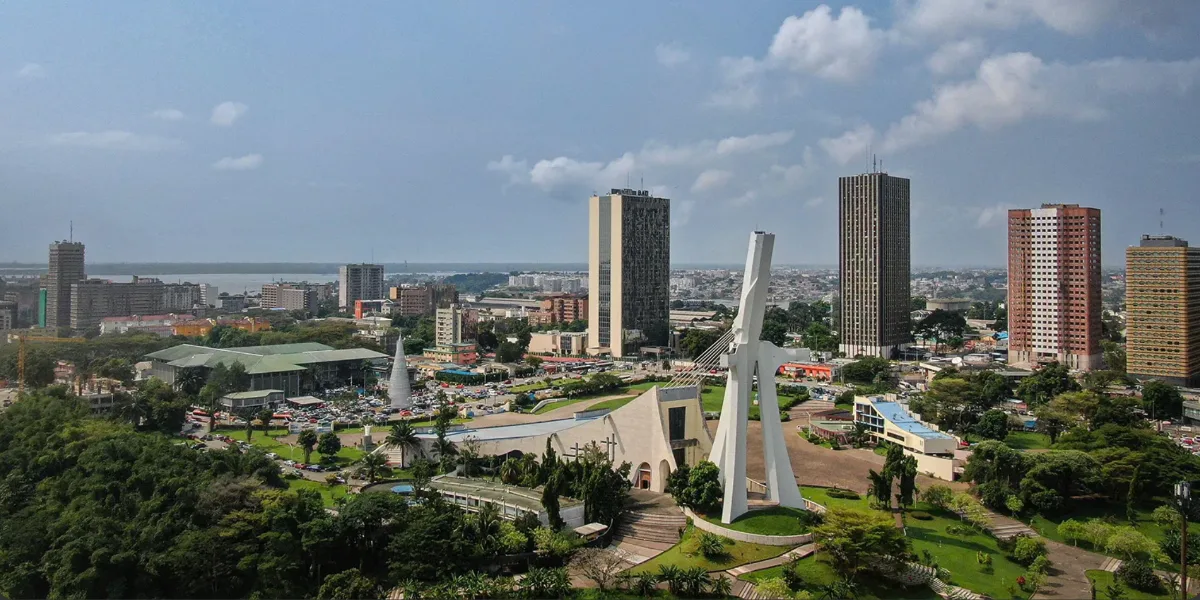
Abidjan, Ivory Coast Digital Nomad Guide 2026
Abidjan is West Africa’s most underrated nomad base: French precision meets hustle culture, coworking spaces fill by 8am, and your laptop runs on lagoon views.
23 October 2026