Abidjan, Ivory Coast: The West African Digital Nomad Guide That Tells You What It Actually Costs
Abidjan is West Africa’s most underrated nomad city in 2026. French-speaking, fiber-connected, cheaper than Lagos, and ignored by every English-first platform. Full cost breakdown, visa walkthrough, yellow fever reality, and where to actually work.
16 min readAbidjan, Ivory Coast
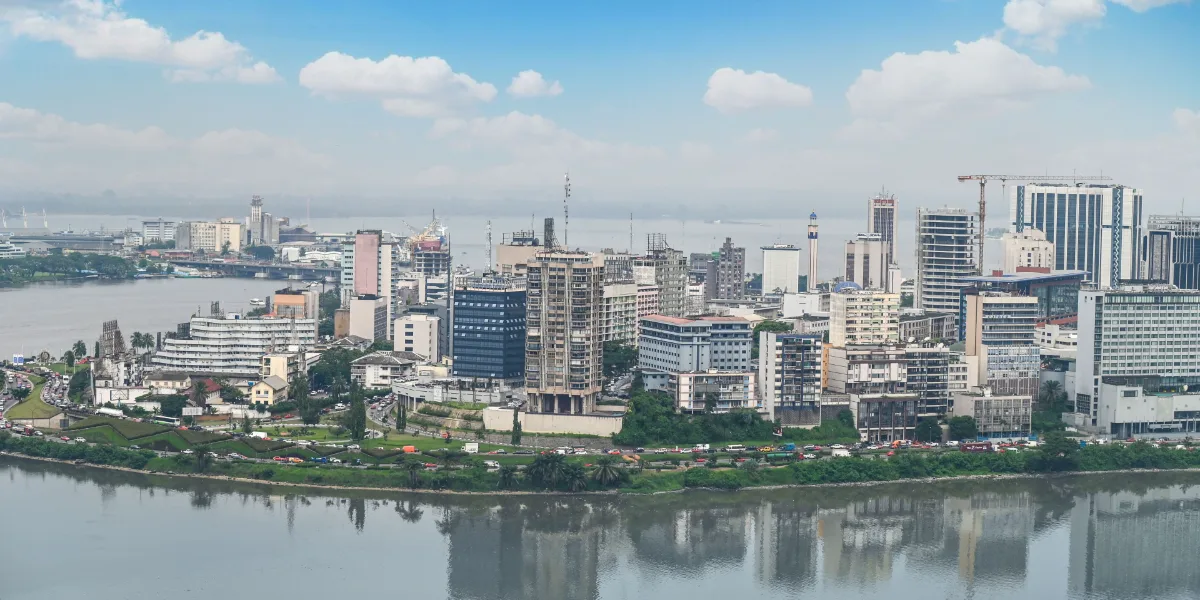
Every nomad platform you currently use was built for English-speaking destinations. Abidjan is what happens when you remove that filter.
Côte d’Ivoire’s economy grew 6.4% in 2025, making it one of the fastest-growing economies on the continent for the fifth consecutive year. Oxford Economics ranked Abidjan among Africa’s top five fastest-growing business cities this year. The government’s Plan National de Développement 2025 to 2030 commits $70 billion to infrastructure investment, including fiber expansion, transportation, and urban development. That is not a background statistic. That is the city actively building the layer that remote workers need.
Meanwhile, Nomad List has almost no Abidjan data. Letswork has no presence. Workfrom has a handful of unverified space listings. No English-first nomad platform has written a real guide to this city.
That is not a gap. That is an open lane.
Abidjan is the economic capital of Côte d’Ivoire, home to 6.3 million people, West Africa’s second-largest city by GDP output, and the commercial engine of a country that has quietly become one of Africa’s strongest economic stories. It has fiber internet, a growing coworking scene anchored by genuine startup capital, an international airport with direct connections to Paris, Brussels, Casablanca, and Addis Ababa, and a cost of living that makes Nairobi look expensive.
The honest qualifier: Abidjan is French-speaking, almost entirely. If your French is functional or you are willing to pick up basic conversational vocabulary quickly, the city rewards you. If you need everything in English, Accra or Nairobi will serve you better. This guide does not hide that. It also does not hide the traffic, the heat, or the fact that the coworking infrastructure here is real but still developing.
What you get in return is a city that most nomad platforms have never bothered to cover. The first-mover advantage for nomads who choose Abidjan now is genuine.
What It Costs to Live in Abidjan
Monthly budget for a digital nomad: $700 to $1,300/month, depending on neighborhood and lifestyle.
One structural advantage worth understanding before the numbers: the West African CFA franc (XOF) is pegged to the euro at a fixed rate. When the euro is weak against the US dollar (as it has been in 2025 and 2026), nomads earning in USD get automatic purchasing power in Abidjan beyond what the nominal cost figures show. At current rates (1 USD approximately 620 XOF), Abidjan is meaningfully cheaper in dollar terms than it was in 2022.
Rent by neighborhood:
Cocody and Cocody Angré are where most long-stay nomads and expats base themselves. A furnished 1-bedroom in Cocody runs $500 to $900/month. In Cocody Angré (slightly further east, more neighborhood-integrated, walkable to several coworking options), the same apartment is $400 to $700/month.
Marcory and Koumassi are more local, less international, and significantly cheaper at $300 to $500/month for a furnished 1-bedroom. Transport to coworking spaces adds time and cost, so factor that in.
Plateau is Abidjan’s central business district: glass towers, banking district, government offices. Rent here targets corporate travelers at $700 to $1,200/month. It is where you go for meetings, not where you live as a nomad.
Monthly cost breakdown:
Rent (furnished 1BR, Cocody Angré): $400 to $700
Groceries (Carrefour/Sococé, cooking most meals): $150 to $200
Eating out (maquis and mid-range restaurants): $120 to $200
Coworking (hot desk, monthly): $80 to $150
Mobile data (Orange, 20GB): $8 to $13
Transport (Yango, estimated 15 to 20 rides/month): $40 to $70
Healthcare (SafetyWing Nomad Insurance): $45 to $56
Entertainment (weekend trips, dining out beyond the above): $80 to $150
Total realistic range: $923 to $1,539/month. Most nomads in Cocody Angré land between $950 and $1,200/month with a mix of cooking and eating out.
Coworking Spaces in Abidjan
JANNGO CAMPUS (Cocody)
The highest-profile tech and coworking hub in Abidjan, anchored by Janngo Capital, Fatoumata Ba’s pan-African impact fund. JANNGO CAMPUS is not just a desk rental. It is a community of founders, tech builders, and investors from across francophone Africa. Hot desks run $10 to $15/day or $100 to $150/month. The fiber is reliable, the events calendar runs regularly, and the community is genuinely curated. Working language is predominantly French, with English-speaking members present. If you are building something and you want to be in the room where West Africa’s startup capital conversations are happening, this is it.
Explore Abidjan workspace options on Zenvivas.
WHAAA (Cocody Angré)
A boutique coworking space in Cocody Angré catering to young professionals and remote workers in the neighborhood. Smaller than JANNGO but significantly more walkable for nomads based in Cocody Angré. Fiber with UPS backup, climate-controlled workspace, meeting rooms. Hot desks approximately $8 to $12/day, $80 to $100/month. The main advantage: if you live in Cocody Angré, you walk here. No Yango, no traffic, no logistics. In a city where cross-commune traffic adds 30 to 45 minutes to any journey, that matters more than it might elsewhere.
BRIDGE BUSINESS CENTER (Plateau)
A professional business center in Plateau targeting corporate remote workers and consultants who need meeting room access and an address in the CBD. Hot desks run approximately $15 to $25/day. Not the community-focused option, but useful for nomads who have regular client meetings in Plateau and need a professional environment nearby. Fiber, UPS backup, printing, and meeting rooms are standard.
Do you run a coworking space in Abidjan? List it free on Zenvivas and get in front of the growing community of nomads choosing francophone West Africa.
Internet and Connectivity
Abidjan’s internet infrastructure improved significantly between 2022 and 2026 as Côte d’Ivoire prioritized fiber expansion under its digital economy roadmap. In established coworking spaces in Cocody and Plateau, expect 30 to 60 Mbps on fiber with UPS backup as standard.
Orange Côte d’Ivoire is the first choice for mobile data. A 20GB bundle runs approximately 5,000 to 8,000 XOF ($8 to $13). Orange runs the country’s primary fiber backbone and has the strongest coverage and reliability in Abidjan proper. MTN Côte d’Ivoire is the backup; solid in the city center, less reliable in outer neighborhoods.
For home fiber: Orange packages for 30 Mbps start around 25,000 to 35,000 XOF/month ($40 to $55). Installation timelines in Cocody are typically one to two weeks. For a month-to-month nomad stay, coworking fiber is the more practical route.
One honest note: Abidjan’s internet is city-center reliable. Outside Cocody, Plateau, and Marcory, consistency drops. If your accommodation is outside these areas, verify the connection before committing.
Power cuts still occur, with declining frequency in the main residential and business districts. Any serious coworking space runs UPS and generator backup. If working from an apartment, ask the landlord about power backup before signing.
The Security Reality of Working in Abidjan (What No Other Guide Covers)
Abidjan’s established coworking spaces run WPA2-encrypted networks. The standard is real infrastructure, not an open café network.
What to do before you plug in anywhere in Abidjan:
Use a VPN on every shared network that is not your own private connection. NordVPN, Mullvad, and ExpressVPN all have servers in West Africa. If you handle client files, financial data, medical information, or anything login-based, a VPN is not optional. This is the professional standard, not a precaution unique to Africa.
One practical advantage Abidjan has over some other nomad cities: French-language router and network admin interfaces mean that coworking space operators here are often better positioned to answer direct technical questions about their infrastructure than front-desk staff in a generic international hotel. Ask them directly whether the network is WPA2 or WPA3 and whether there is a guest network separated from the internal office network. In established spaces, you will get a straight answer.
Enable two-factor authentication on every work account before you travel. This is not Abidjan-specific. It is the baseline for anyone working from a shared environment anywhere in the world.
The spaces listed in this guide run secure networks. The issue, as always, is knowing the difference before you sit down.
Visa: What You Actually Need to Work from Abidjan
Before anything else: yellow fever vaccination is a legal entry requirement for Côte d’Ivoire. No exceptions. You will be turned back at the airport or vaccinated on the spot without a valid yellow fever certificate. Get this done before you book flights and carry the physical yellow card with you at all times.
Côte d’Ivoire does not have a formal digital nomad visa as of November 2026. The practical pathways:
Tourist visa (visa de tourisme): Available on arrival for most nationalities, or in advance online. Valid for 30 days. Extendable at the Direction Générale de l’Immigration in Plateau. Fee on arrival: approximately $55 to $70 depending on nationality.
ECOWAS nationals: Citizens of Nigeria, Ghana, Senegal, Mali, Burkina Faso, Guinea, Benin, Togo, Niger, Sierra Leone, Liberia, Gambia, Guinea-Bissau, Cape Verde, and Mauritania enter Côte d’Ivoire visa-free for up to 90 days. This covers 350 million people. If you hold an ECOWAS passport, Abidjan has essentially the most frictionless entry in West Africa.
EU passport holders: Visa on arrival, 30 days, approximately $55 to $70, extendable.
Long-stay visa (visa long séjour): For stays beyond 90 days. Requires application at a Côte d’Ivoire embassy or consulate in your home country before arrival. Documents required: proof of accommodation, proof of financial means (typically three to six months of bank statements), clean criminal record. Processing: four to six weeks minimum.
How to Extend Your Tourist Visa in Abidjan: Step by Step
Step 1. Gather your documents before going. You will need: your passport (valid at least six months beyond your intended stay), two passport-format photos, proof of your current accommodation in Abidjan (a lease agreement or confirmed hotel booking), proof of financial means (bank statement or international card), and your original entry stamp page.
Step 2. Go to the Direction Générale de l’Immigration (DGI). The main office for foreigner immigration services is in Plateau, Abidjan’s CBD. Take a Yango to avoid parking.
Step 3. Take a number and wait for the foreigner services counter. The office is French-language only. If your French is limited, bring a printed note stating your request: “Je souhaite prolonger mon visa touristique de 30 jours.”
Step 4. Submit your documents at the counter. The officer will review your entry date and current visa validity. Extensions are typically granted for 30 additional days.
Step 5. Pay the extension fee. As of 2026, the extension fee runs approximately 10,000 to 15,000 XOF ($16 to $24). Payment is at the cashier window inside the same building.
Step 6. Receive your extension stamp. Processing is usually same-day for tourist visa extensions if you arrive early (8:30 to 9:00 AM). The extended stamp is added to your passport.
Step 7. Note your new exit date. Overstaying in Côte d’Ivoire carries a fine and potential detention at departure. Mark the date clearly.
For stays beyond 60 days total or any work-adjacent activity under a tourist visa: speak with a local immigration attorney before that point. The legal landscape for remote workers without a formal nomad visa category is a gray area in Côte d’Ivoire as in most West African countries. Know your position before you are in it.
Abidjan’s Airport Advantage
Félix Houphouët-Boigny International Airport is one of the best-connected airports in West Africa and an underused argument for choosing Abidjan as a base. Direct routes include Paris (Air France, 6 hours), Brussels (Brussels Airlines), Addis Ababa (Ethiopian Airlines, connecting to 50+ African cities), Casablanca (Royal Air Maroc), and direct connections to Lagos, Dakar, Accra, Nairobi, Johannesburg, and Douala.
For nomads who move frequently within Africa, Abidjan’s flight connections are a genuine competitive advantage over Accra or Dakar. It is also the main West African hub for Air Côte d’Ivoire’s expanding regional network. If you are treating Abidjan as a base and traveling regionally for client work, the airport is an asset that rarely gets mentioned in nomad coverage.
The Ecosystem You Are Joining
Abidjan is not just a city with coworking spaces. It is the financial and commercial capital of francophone West Africa, and in 2026 that means something specific.
Janngo Capital, based at JANNGO CAMPUS, has deployed over $70M into African startups across health tech, fintech, and logistics. Wave, one of West Africa’s fastest-growing fintechs, has significant Abidjan operations. Orange Money and MTN MoMo both run regional headquarters here. The Côte d’Ivoire government’s Tech Hub initiative has funded over 200 local startups since 2022.
For nomads who want to be in a city where the ecosystem is building real wealth (not just tourism infrastructure), Abidjan belongs in the same conversation as Nairobi and Kigali. The difference is the working language and the fact that most English-first platforms have not covered it yet. That gap is temporary. The ecosystem is not.
6 West African Nomad Destinations Compared: 2026
Build this as a native table in your CMS. Data for entry:
Headers: City/Country / Visa for Most Nationalities / Duration / Min. Income Req. / Cost Estimate / ECOWAS Entry
Abidjan, Côte d’Ivoire / Tourist visa on arrival / 30 days, extendable / None formal / $700 to $1,300/mo / Visa-free 90 days
Dakar, Senegal / Visa-free for many nationalities / 90 days / None formal / $800 to $1,500/mo / Visa-free 90 days
Accra, Ghana / Visa on arrival or eVisa / 30 to 60 days / None formal / $900 to $1,600/mo / Visa-free 90 days
Lagos, Nigeria / eVisa required / 30 days / None formal / $900 to $1,800/mo / Visa-free 90 days
Lomé, Togo / Visa on arrival / 7 to 30 days / None formal / $500 to $900/mo / Visa-free 90 days
Cotonou, Benin / eVisa required / 30 days / None formal / $500 to $1,000/mo / Visa-free 90 days
Note below table: Visa requirements change. Always verify at the official government portal before applying. ECOWAS visa-free entry applies to nationals of ECOWAS member states only. This table reflects confirmed information as of November 2026.
When You Close the Laptop
Grand-Bassam. UNESCO World Heritage Site, 40km east of Abidjan. A former French colonial capital with well-preserved early-20th-century architecture, a beach, seafood restaurants, and a working craft market. Direct bush taxi from Adjamé or Marcory: approximately 2,500 to 3,500 XOF ($4 to $6). Go Saturday morning, return Sunday evening. It is the standard Abidjan weekend reset for nomads and expats for good reason.
Bingerville and the lagoon system. Abidjan is built across the Ébrié Lagoon network. Bingerville, 30 minutes east of Cocody by Yango, sits on the lagoon and offers pirogue rides, waterfront restaurants, and significantly cooler temperatures than the city center. The botanical garden (Jardin Botanique de Bingerville) is legitimately beautiful and costs almost nothing to enter.
The maquis circuit. Abidjan’s open-air restaurant culture is excellent and extremely affordable. The maquis around Cocody Angré and Yopougon serve grilled tilapia, braised chicken, foutou banane, and attiéké at prices that feel impossible if you have been eating in Dubai or Nairobi. A proper dinner for two runs $10 to $18 including drinks. Eat at them regularly. They are the social infrastructure of the city.
Marché de Cocody. The largest market in Abidjan’s residential quarter. Fresh produce, local fabrics, electronics, everything. A functioning neighborhood market, not a tourist market. Go Tuesday or Thursday morning before the afternoon heat peaks.
Healthcare in Abidjan
Abidjan has the strongest private healthcare infrastructure in francophone West Africa. The two main options for nomads:
Clinique Internationale Sainte Anne-Marie (CISAM) in Cocody: English-speaking staff available, international-standard facilities, the most used private clinic by expats and business travelers in Abidjan.
CHU de Cocody (Cocody Teaching Hospital): public hospital, French-language, more affordable but longer wait times. Best for non-emergency situations where you have flexibility.
For insurance, SafetyWing Nomad Insurance covers Côte d’Ivoire and is widely used by nomads on West Africa circuits. Starting at approximately $45 to $56/month depending on age. Cigna Global and AXA International both cover Côte d’Ivoire for the mid-to-premium tier.
Yellow fever vaccination is required for entry, as noted above. Malaria prophylaxis is strongly recommended for stays in Abidjan: consult your doctor before travel and start the medication before arrival. Hepatitis A and typhoid vaccinations are advised. These are standard for West Africa travel and not unique to Côte d’Ivoire.
FAQ: Abidjan for Digital Nomads
Is Abidjan good for digital nomads in 2026?
Yes, with one significant qualifier: French is not optional. If you speak functional French or are willing to pick up basic conversational vocabulary quickly, Abidjan delivers a strong combination of affordable living, fiber internet, a growing startup ecosystem, and a city that most English-first nomad platforms have never covered. The first-mover advantage for nomads who choose Abidjan now is real.
How much does it cost to live in Abidjan as a digital nomad per month?
Most nomads spend $700 to $1,300/month in Abidjan. Rent for a furnished 1-bedroom in Cocody Angré runs $400 to $700/month. JANNGO CAMPUS coworking is $100 to $150/month. Food, transport, and mobile data add $300 to $450/month.
What is the best coworking space in Abidjan?
JANNGO CAMPUS in Cocody is the flagship option: fiber, curated startup community, $100 to $150/month hot desk. WHAAA in Cocody Angré is the best neighborhood option for nomads based in that area at $80 to $100/month.
How fast is the internet in Abidjan?
Established coworking spaces in Cocody and Plateau run 30 to 60 Mbps on fiber with UPS backup. Mobile data: Orange Côte d’Ivoire is the first choice (20GB approximately $8 to $13).
Do I need a visa to work from Abidjan?
Côte d’Ivoire has no digital nomad visa. Most nationalities enter on a tourist visa (30 days on arrival, extendable). ECOWAS nationals (Nigeria, Ghana, Senegal, and 12 other member states) enter visa-free for up to 90 days. For stays beyond 90 days, a long-stay visa requires pre-arrival embassy application.
Do I need a yellow fever vaccine for Côte d’Ivoire?
Yes. Yellow fever vaccination is a legal entry requirement. You will be turned back at the airport or vaccinated on arrival without a valid yellow fever certificate. Get vaccinated before you book flights and carry your physical yellow card at all times. No exceptions.
Is Abidjan cheaper than Accra or Dakar?
In most categories, yes. Accra has seen significant price increases since 2022 due to Ghana’s currency depreciation. Dakar is comparable on rent but higher on food and transport. Abidjan’s CFA franc peg to the euro gives it additional price stability, and the current euro-dollar rate makes it more affordable in USD terms than it appears at face value. Lomé and Cotonou are cheaper than Abidjan, but have thinner coworking infrastructure.
Is Abidjan safe for digital nomads?
Abidjan is safer than its West African reputation suggests, particularly in Cocody and Cocody Angré. Standard urban awareness applies: use Yango rather than unregistered taxis, avoid walking alone after dark in unfamiliar neighborhoods, and keep valuables out of sight in crowded areas like Treichville and the Plateau market areas. Most nomads and expats in Cocody report feeling safe day-to-day. The worst traffic in West Africa is a more consistent daily challenge than personal safety in the established residential areas.
QUICK FACTS: Abidjan for Digital Nomads
Monthly Budget: $700 to $1,300/month
Accommodation: 1BR $300 to $900/month depending on neighborhood
Best Neighborhood: Cocody Angré (walkable, international community, coworking proximity)
Value Neighborhood: Marcory ($300 to $500/month 1BR, strong local transport)
Internet Speed: 30 to 60 Mbps fiber in Cocody and Plateau coworking spaces
Best SIM Card: Orange Côte d’Ivoire (20GB approximately $8 to $13)
Best Coworking: JANNGO CAMPUS, Cocody ($100 to $150/month)
Value Coworking: WHAAA, Cocody Angré ($80 to $100/month)
Power Backup: UPS standard at coworking spaces; verify at apartments
Visa: Tourist visa 30 days on arrival (extendable); ECOWAS nationals visa-free 90 days; no digital nomad visa as of November 2026
Yellow Fever: Mandatory for entry. Carry your yellow card at all times.
Malaria Prophylaxis: Strongly recommended. Start before arrival.
Healthcare: Clinique Internationale Sainte Anne-Marie (Cocody, English-speaking staff)
Health Insurance: SafetyWing covers Côte d’Ivoire from approximately $45/month
Currency: West African CFA Franc (XOF). 1 USD approximately 620 XOF (2026). Fixed peg to the euro.
Language: French (essential); English limited outside international business
Getting Around: Yango (reliable, avoid unregistered taxis); gbaka minibuses for local travel
Airport: Félix Houphouët-Boigny International. Direct to Paris, Brussels, Casablanca, Addis Ababa, Lagos, Nairobi.
Weekend Escape: Grand-Bassam (40km east, UNESCO heritage, beach, $4 to $6 by bush taxi)
Nearby Zenvivas Cities: Dakar, Senegal · Accra, Ghana · Lagos, Nigeria
Zenvivas Page: zenvivas.com/destinations/cote-divoire/abidjan
Ready to find your workspace in Abidjan? Browse verified coworking spaces at Zenvivas. Do you run a coworking space or stay in Côte d’Ivoire? Abidjan’s international business traffic is projected to grow 40% by 2028 under the Plan National de Développement. The nomads arriving this year are the advance signal. The spaces that are listed and verified now are the ones that will capture that demand. List free on Zenvivas before the curve arrives.
Keep reading

Lagos for Remote Workers in 2026: What Nobody Told You Before You Booked the Flight
Everything you actually need to know about working remotely from Lagos in 2026: real costs in USD and NGN, the best coworking spaces, internet security, and honest advice from a…
2 November 2026
205,000 Tech Jobs Cut in 2026. Here Is Where the Workers Are Going.
The biggest tech layoff cycle since 2020 is producing a new wave of globally mobile workers. Africa and the Middle East have the infrastructure, the visas, and the cost advantage…
2 November 2026
Best Coworking Spaces in Addis Ababa for Digital Nomads and Remote Workers 2026
The only verified guide to coworking in Addis Ababa. We contacted every space, confirmed pricing, and checked WiFi speeds. Updated October 2026.
26 October 2026