Guide
Safety and Security in Cape Town
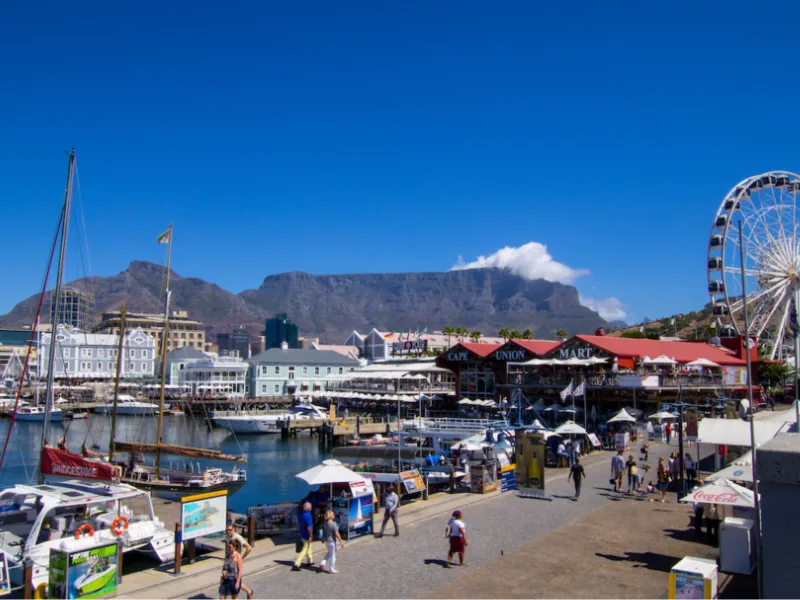
Safety is the first question every nomad asks about Cape Town, and it is the reason Zenvivas verifies every space and stay on our platform. We do not list a coworking spot or apartment without knowing the neighborhood, the security setup, and what the walk home looks like after dark. Our cybersecurity founder background means we take digital safety just as seriously as physical safety. This guide is the honest briefing we give every nomad before they land.
Cape Town gets a reputation online that scares people off before they even check the facts. Here is what we actually found.
The crime stats are real. The Western Cape recorded 983 murders in Q1 2026, most of them concentrated in Cape Flats neighborhoods like Mfuleni, Delft, Gugulethu, and Khayelitsha. Those areas are driven by gang violence and are not where you will be living or working. The neighborhoods where remote workers base themselves operate at a completely different safety level. Green Point and Sea Point have heavy foot traffic and are well-lit after dark. Gardens is quieter and residential. De Waterkant is compact and walkable. The V&A WATERFRONT has private security patrols around the clock. Woodstock is safe during the day but thinner at night. Camps Bay is one of the safest areas in the city but the most expensive.
That said, you do not get to be careless. Smash-and-grab theft at traffic lights is still common. Do not leave bags visible on the passenger seat. Do not walk with your phone out at night. The CBD gets quieter after business hours and Long Street after 11pm is a different place than Long Street at 2pm. If you are out late, use UBER or BOLT to get home. Both apps work well across the city and rides are cheap, R30 to R50 from Sea Point to the CBD.
When booking accommodation, look for these basics: access-controlled entrance, CCTV, a security guard or patrol, and secured parking if you are renting a car. Most long-stay apartments in the popular nomad neighborhoods have all of this as standard. Avoid ground-floor units on quiet side streets. Choose a building with a managed entrance.
If you are a solo female traveler, Cape Town is one of the better cities in Africa for it, but the usual rules apply. Connect with other remote workers through coworking spaces before exploring on your own. Do not hike Table Mountain or Lion’s Head solo. Watch your drink at bars. Walk in pairs after dark.
The trend is moving in the right direction. Contact crime dropped 6.3% in the first quarter of 2026. Murder was down 6.7%. Carjackings fell 14.6%. Residential robberies dropped 15%. Nearly 70,000 arrests were made and 610 firearms seized in that same period. The city is not ignoring the problem.
The US travel advisory for South Africa sits at Level 2: “Exercise increased caution.” Canada says “Exercise a high degree of caution.” Both are the same advisory level as Mexico, Brazil, and Kenya. It means be aware, not stay away. Download ESKOMSEPUSH before you arrive. If load shedding returns, knowing when your area goes dark helps you plan around it.
If you use common sense, stay in the right neighborhoods, and follow the same precautions any Cape Town local follows, this city is not only livable. It is one of the best places in Africa to base yourself as a remote worker.
QUICK FACTS
Travel advisory: US Level 2 “Exercise increased caution” (same as Mexico, Brazil, Kenya)
Safest nomad neighborhoods: Green Point, Sea Point, Gardens, De Waterkant, V&A Waterfront, Camps Bay
Daytime safe/nighttime thinner: Woodstock, CBD
Areas to avoid: Cape Flats (Khayelitsha, Mfuleni, Delft, Gugulethu, Nyanga, Manenberg)
2026 crime trend: Contact crime down 6.3%, murder down 6.7%, carjackings down 14.6%
Transport: UBER and BOLT, R30 to R50 typical ride
Emergency: Police 10111, Ambulance 10177
Insurance: SAFETYWING, WORLD NOMADS (both cover South Africa)
Essential app: ESKOMSEPUSH (power outage tracking)